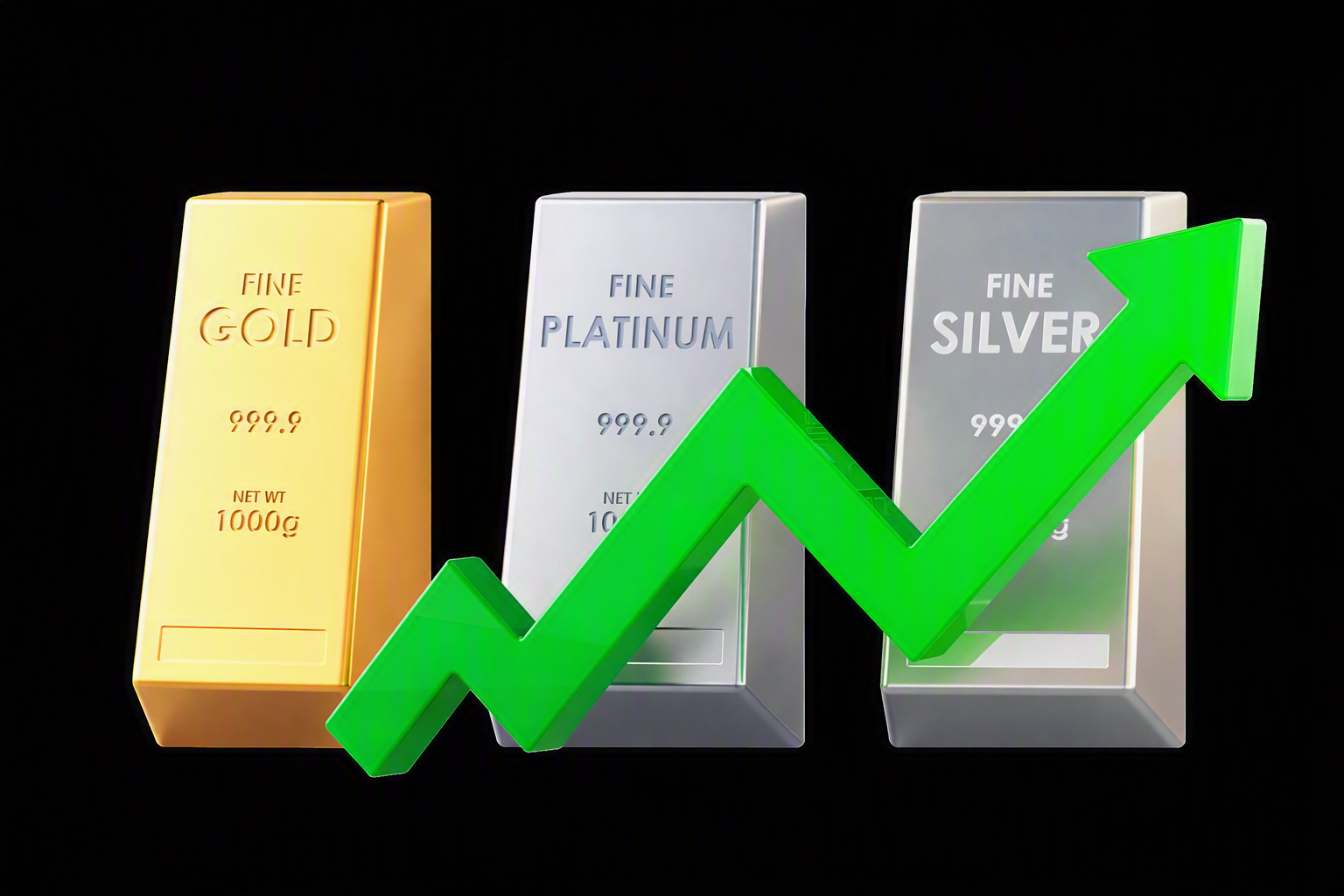
Precious metal markets have always moved in cycles, but the past two years have delivered some of the sharpest swings in decades. Gold, silver, and platinum are experiencing rapid price changes driven by geopolitical tension, economic uncertainty, and sustained industrial demand. For companies across the metal finishing and plating sector, these fluctuations are more than headline news; they directly influence sourcing strategies, production planning, and long‑term material decisions.
Below is a breakdown of what’s driving the volatility and how it’s affecting the silver plating and metal finishing industry today.
Geopolitical Instability Is Driving Price Surges for Precious Metals
Global conflict and trade disruptions remain the strongest catalysts for precious metal volatility. Events like wars, higher tariffs, trade disputes can trigger surges in gold and other precious metals. With the war in Iran influencing oil markets and investor confidence, as well as ongoing instability in Europe and South America, gold demand has surged. Gold’s price rose 64% in 2025.
When investors seek safe‑haven assets, gold and silver prices rise quickly, creating ripple effects across plating operations that rely on fairly consistent material costs.
Economic Uncertainty Is Amplifying Market Swings
Recession fears, stock market fluctuations, and higher unemployment have pushed investors away from traditional financial products and toward precious metals. Gold typically absorbs this demand smoothly, but silver behaves differently. Silver swings more dramatically due to its smaller market size and heavy reliance on industrial demand.
This means silver plating operations can see sudden cost spikes followed by equally sudden drops, making forecasting more challenging for manufacturers, OEMs, contract manufacturers and finishing shops. It’s not all spikes. Prices will occasionally drop suddenly. So there are pronounced fluctuations, not just increases.
The result is more than the usual market swings and this volatility affects everything from quoting cycles to inventory planning.
A Look At Each Metal And What Their Market Is Signaling
Gold
Gold remains the most stable precious metal, yet it’s currently trading far above its long‑term norms as markets adjust to shifting risk.
Silver
Compared to gold, silver has even more price swings with higher highs, lower lows. Analysts expect continued upside due to supply deficits, but severe daily or weekly swings remain common.
Platinum
Platinum is highly sensitive to automotive and industrial cycles. Price spillovers from other commodities frequently impact platinum’s value, causing fluctuations that are often extreme.
Industrial Demand Is Tightening Supply, Especially for Silver
Silver’s role in modern technology is expanding rapidly. Strong industrial demand, specifically for silver in solar arrays, data centers and EV batteries, continues to add to its scarcity. This creates a dual‑pressure environment: financial market volatility on one side, and real‑world supply constraints on the other. For plating operations, this means higher competition for the silver that is available. You may also have to wait longer for it, resulting in unpredictable lead times.
How Silvex Is Responding
1. Exploring Technical Alternatives
To reduce exposure to price swings, many manufacturers are evaluating:
- Thinner plating profiles
- Selective plating (metal only on critical contact points)
- Alternative alloys such as palladium‑nickel or low‑karat gold
Thinner plating or selective plating can only be considered for certain applications. Aerospace has specific requirements for their finishes that cannot be altered. Silvex offers one gold wash treatment, so low‑karat gold alternatives are less relevant internally, but they remain a major industry trend worth acknowledging.
2. Minimizing Waste Through Better Recovery
Improved metal recovery techniques help reduce scrap, reclaim precious metals, and offset some cost volatility.
3. Tightening Material Planning & Forecasting
With sudden price drops and spikes, finishing operations are relying more heavily on real‑time market monitoring, flexible quoting structures and strategic purchasing windows These approaches help stabilize production costs even when markets are unpredictable.
What This Means for Silvex Customers
Volatility isn’t just an economic story, it’s an operational one. The smartest providers of plating and finishing are adapting through smarter material usage, tighter process control, and ongoing evaluation of alternative technologies; and that is what we are doing. We’ll continue to monitor market conditions closely and adjust sourcing strategies to maintain reliability, consistency, and quality across all finishing services.
We’ll work with you to engineer around the volatility in any way possible. Let’s talk about it. For more information or to get a quote, fill out the short form on our website or give us a call at 866-424-9171.